

Staying ahead of your tax obligations and minimizing surprises is crucial for any business owner. One effective strategy to achieve this is by making quarterly tax payments. This proactive approach not only ensures compliance with IRS regulations but also helps you manage your cash flow and minimize your overall tax burden.
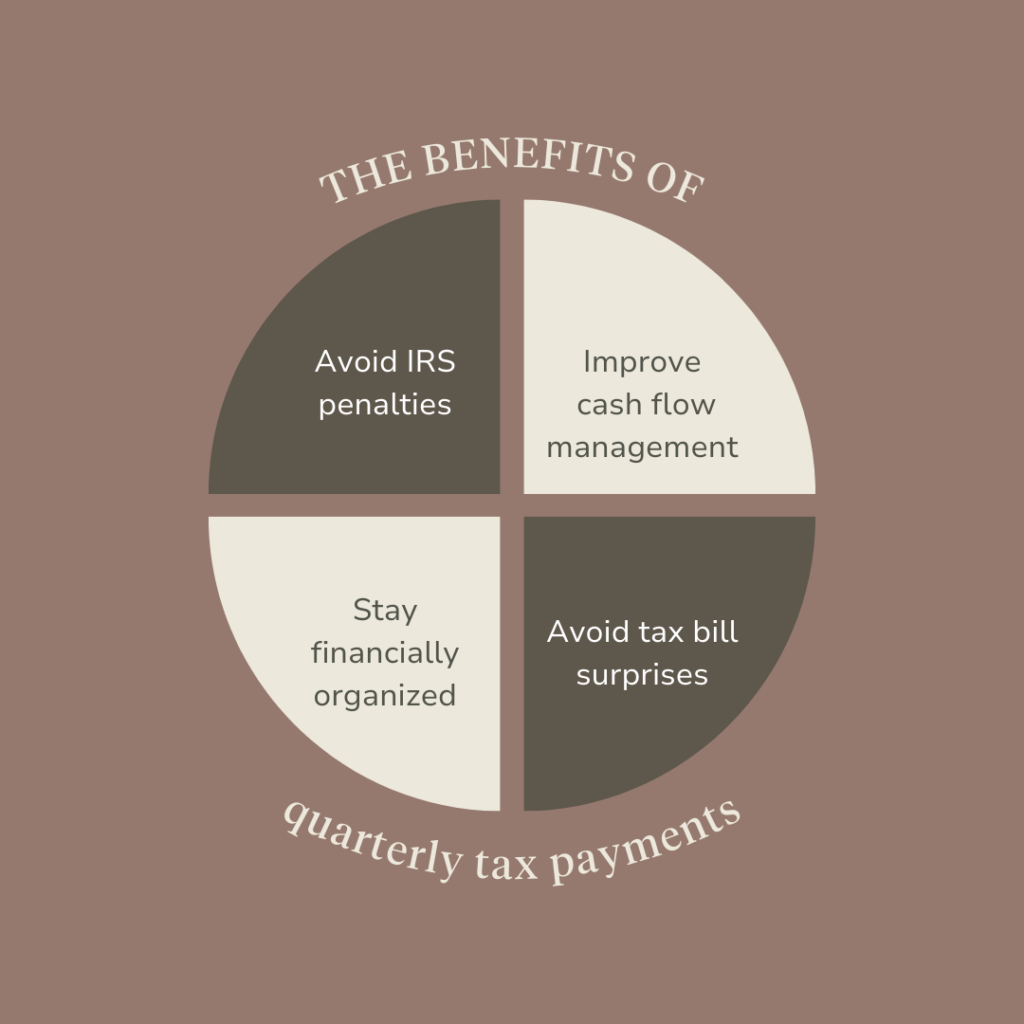
Key Benefits of Quarterly Tax Payments
Avoid Penalties: Making timely quarterly payments helps you avoid IRS penalties and interest charges. The IRS imposes penalties on taxpayers who do not pay enough tax throughout the year, and quarterly payments are a straightforward way to avoid these additional costs.
Better Cash Flow Management: Spreading out your tax payments throughout the year can make it easier to manage your cash flow. Instead of facing a large tax bill at year-end, you can make smaller, more manageable payments each quarter.
Minimize Tax Burden: By accurately estimating and paying taxes owed quarterly, you reduce the risk of a large tax bill at year-end. This can help you avoid the financial strain of a lump-sum payment and allow for better financial planning throughout the year.
How Quarterly Tax Payments Work
To effectively implement quarterly tax payments, follow these steps:
Estimate Your Expected Income: Start by estimating your expected income for the year. This includes all sources of income, such as salary, dividends, interest, and business earnings.
Calculate Your Tax Liability: Based on your estimated income, calculate your expected tax liability. Consider all applicable deductions, credits, and tax rates to get an accurate estimate.
Make Quarterly Payments: Divide your estimated annual tax liability by four to determine your quarterly payment amount. The IRS requires payments to be made by the following dates:
- April 15: Payment for January 1 to March 31
- June 15: Payment for April 1 to May 31
- September 15: Payment for June 1 to August 31
- January 15 (of the following year): Payment for September 1 to December 31
Adjust as Needed: Throughout the year, monitor your income and expenses. If your financial situation changes significantly, adjust your quarterly payments accordingly to avoid underpayment or overpayment.
Practical Tips for Making Quarterly Tax Payments
Set Reminders: Mark the quarterly payment due dates on your calendar to ensure you don’t miss any deadlines. Late payments can result in penalties and interest charges.
Use IRS Tools: The IRS provides tools such as the Estimated Tax Worksheet and online payment options to help you calculate and make your quarterly payments. These resources can simplify the process and ensure accuracy.
Consult a Tax Professional: If you’re unsure about how much to pay or how to calculate your estimated tax liability, consult a tax professional. They can provide personalized advice and help you avoid common pitfalls.
Keep Detailed Records: Maintain thorough records of all your income, expenses, and tax payments. This documentation is essential for accurate tax filing and can help you make informed decisions about your quarterly payments.
Review Annually: At the end of each tax year, review your actual income and tax liability compared to your estimates. This can help you refine your estimation process for the following year and improve accuracy.
Final Thoughts
Making quarterly tax payments is a proactive strategy to stay ahead of your tax obligations and avoid surprises. By spreading out your payments, you can better manage your cash flow and minimize the risk of a large year-end tax bill.
At Goodman CPA, we specialize in helping business owners navigate their tax responsibilities and optimize their financial strategies. Our team is dedicated to providing expert advice and personalized support to ensure you stay compliant and maximize your tax savings.
For more tips and strategies on tax savings and financial management, stay tuned to our blog. At Goodman CPA, we’re committed to helping you achieve your financial goals with confidence and clarity.